
Geothermal brines
Hot subsurface waters may contain dissolved lithium. Extraction potential depends on brine chemistry and compatibility with the energy process.
A Ukrainian project for direct lithium extraction from subsurface brines.
Geology, oil & gas infrastructure and DLE technology — a new perspective on Ukraine’s critical minerals.
Why lithium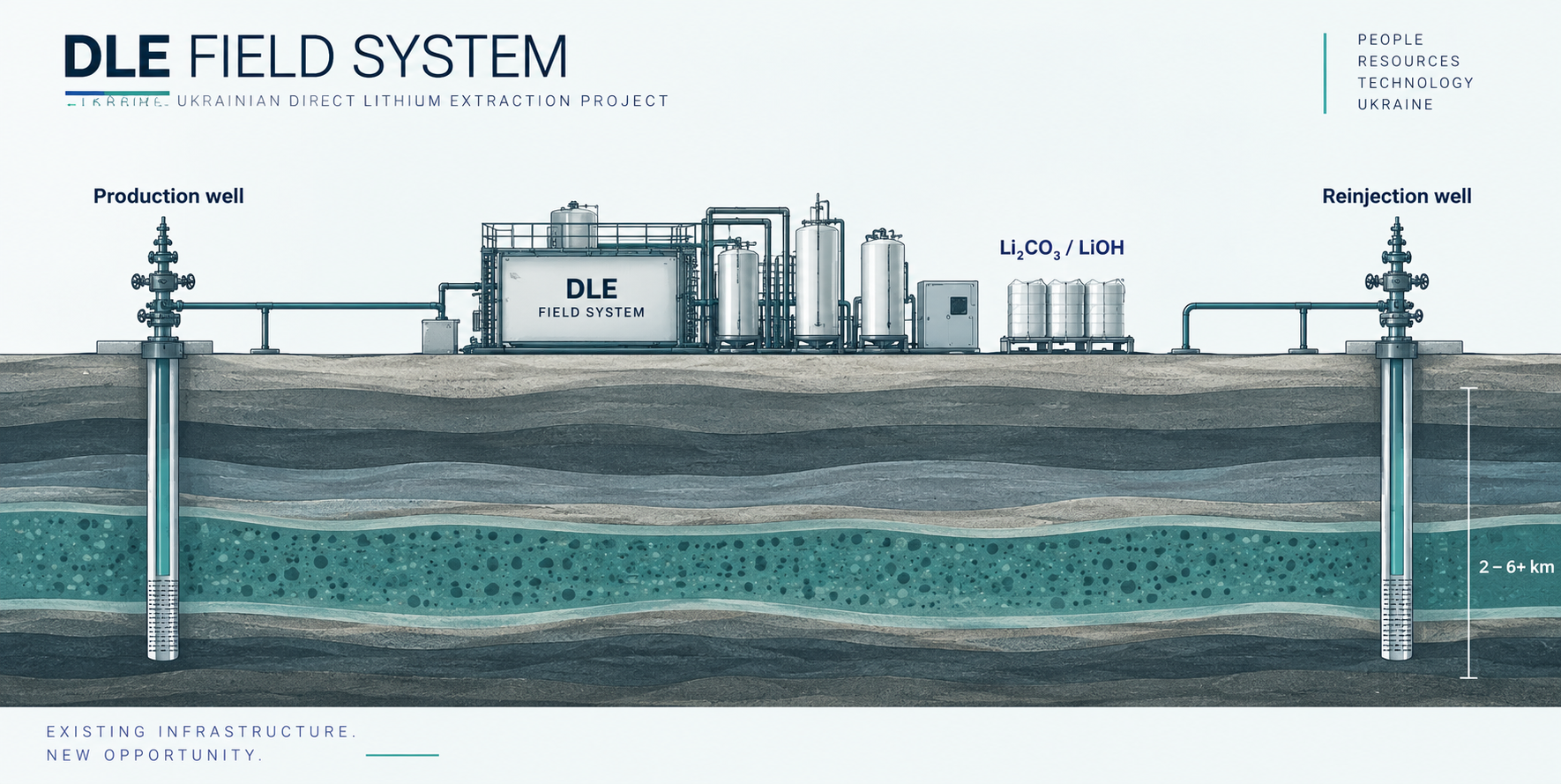
Lithium is a critical mineral resource for lithium-ion batteries, from electric vehicles to energy storage systems.
Its importance reflects two factors: its role in energy technologies and the reliability of supply. New sources and extraction technologies expand the opportunities across this value chain.
Electric mobility · batteries · energy storage
Diversified sources · technology · resource base
Hot subsurface waters may contain dissolved lithium. Extraction potential depends on brine chemistry and compatibility with the energy process.
Lithium-bearing formation waters are a focus of geological and technology studies. Existing well infrastructure may provide a basis for resource access.
Sources: IEA — Critical Minerals ↗ · USGS — Lithium ↗
We combine geology, engineering and DLE technology to progressively verify the resource and its development potential.
Ukraine’s potentialDevelopments and research across the global DLE industry, linked to original sources. Company announcements are distinguished from independent confirmation, and research from commercial milestones.
Initial selection of dated announcements. Daily updates are not connected yet.
The company described well completion and surface-equipment preparation for reservoir testing at Clearwater.
Source: E3 LithiumThe company reported filing its definitive feasibility study. Phase-one design capacity is 22,500 tonnes of lithium carbonate per year, a plan rather than actual production.
Source: Standard Lithium / EquinorThe announcement concerns a demonstration facility, not commissioning of a commercial plant.
Source: E3 LithiumThe company reported shipping 40 tonnes of lithium carbonate from Centenario-Ratones through the Port of Rosario.
Source: Eramet / EramineThe university described redox-couple electrodialysis for concentrating lithium from brines. This is research, not a commercial project.
Source: StanfordTechnology, resources, research and investment.